AI Maintenance Assistant
powered by machine knowledge and live data
Manuals, schematics, service history and live machine data, in one AI assistant. Diagnose faster, find root causes, fix with confidence.
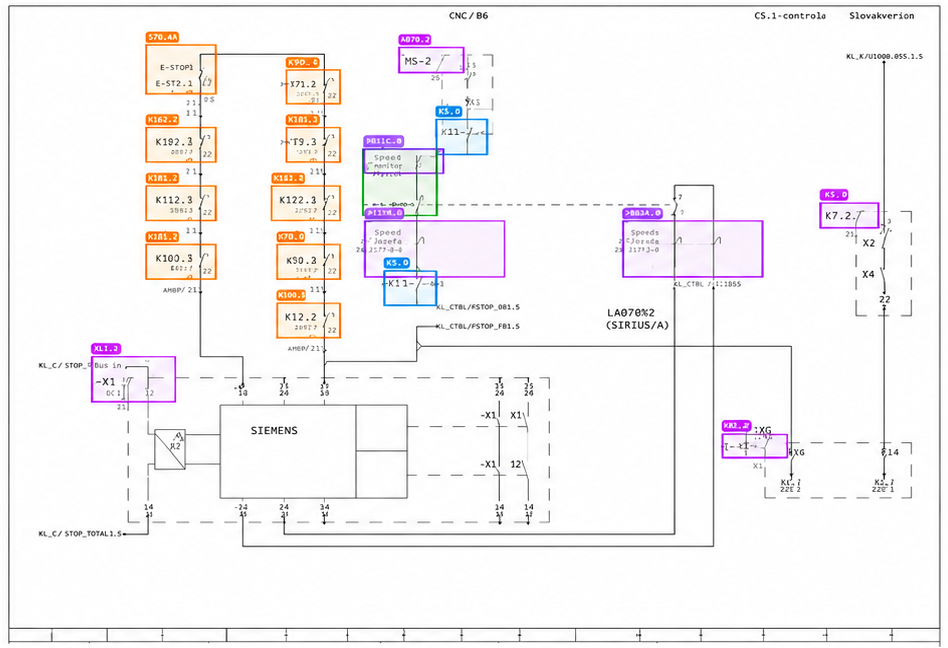
Understand
Schematics with AI
Open any electrical or hydraulic sheet and ask in plain language — the AI reads the diagram in context and points to the exact contacts, relays and sheets.
- Chat with your schematics in context
- Trace relays, contacts and buses instantly
- Jump straight to the sheet that fails
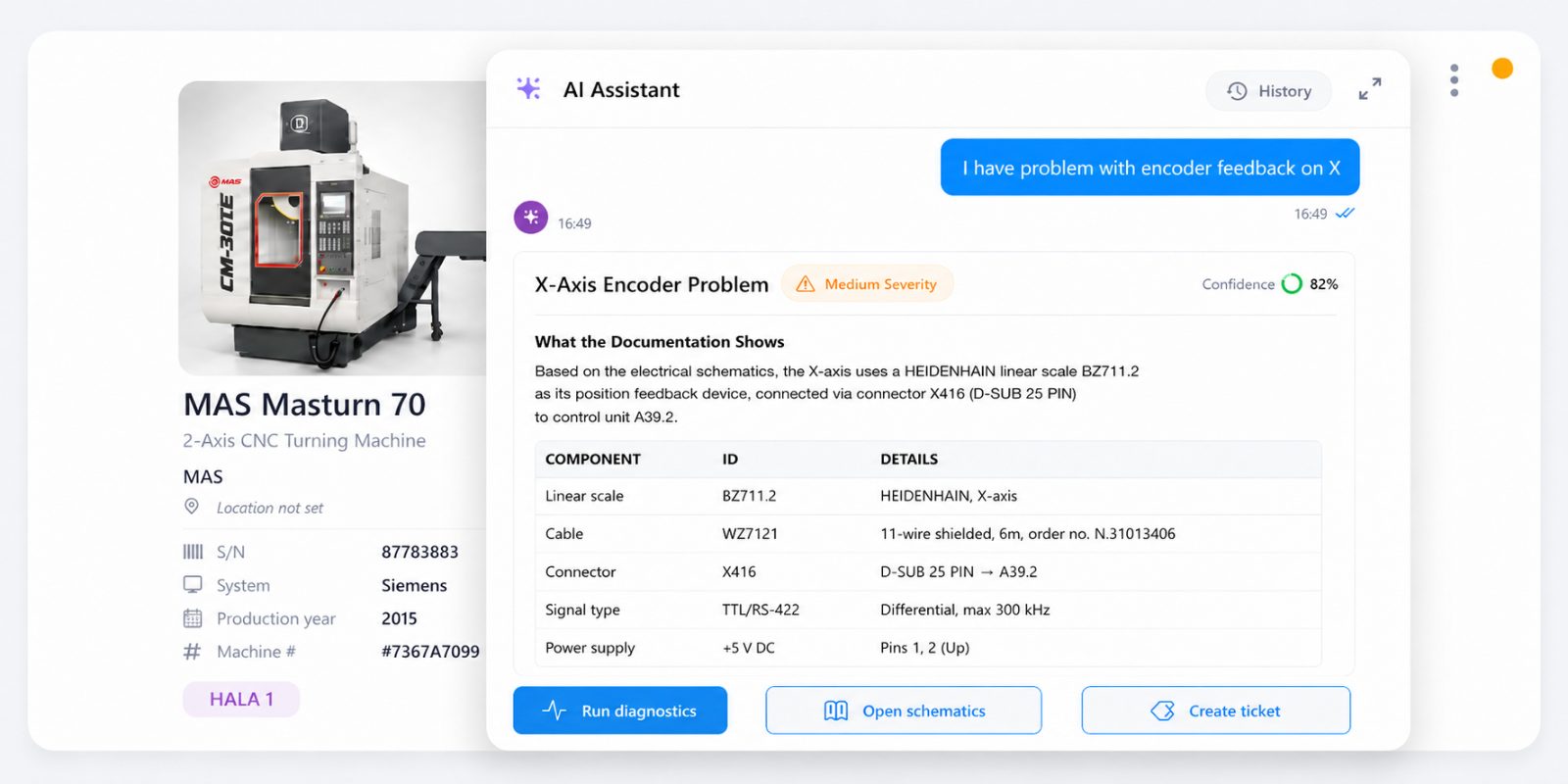
At the same time, it can work with dynamic data from IoT sensors, machine logs or direct PLC interfaces, including live alarms, operating values, runtime, cycles, temperatures, pressures, vibration and machine status.
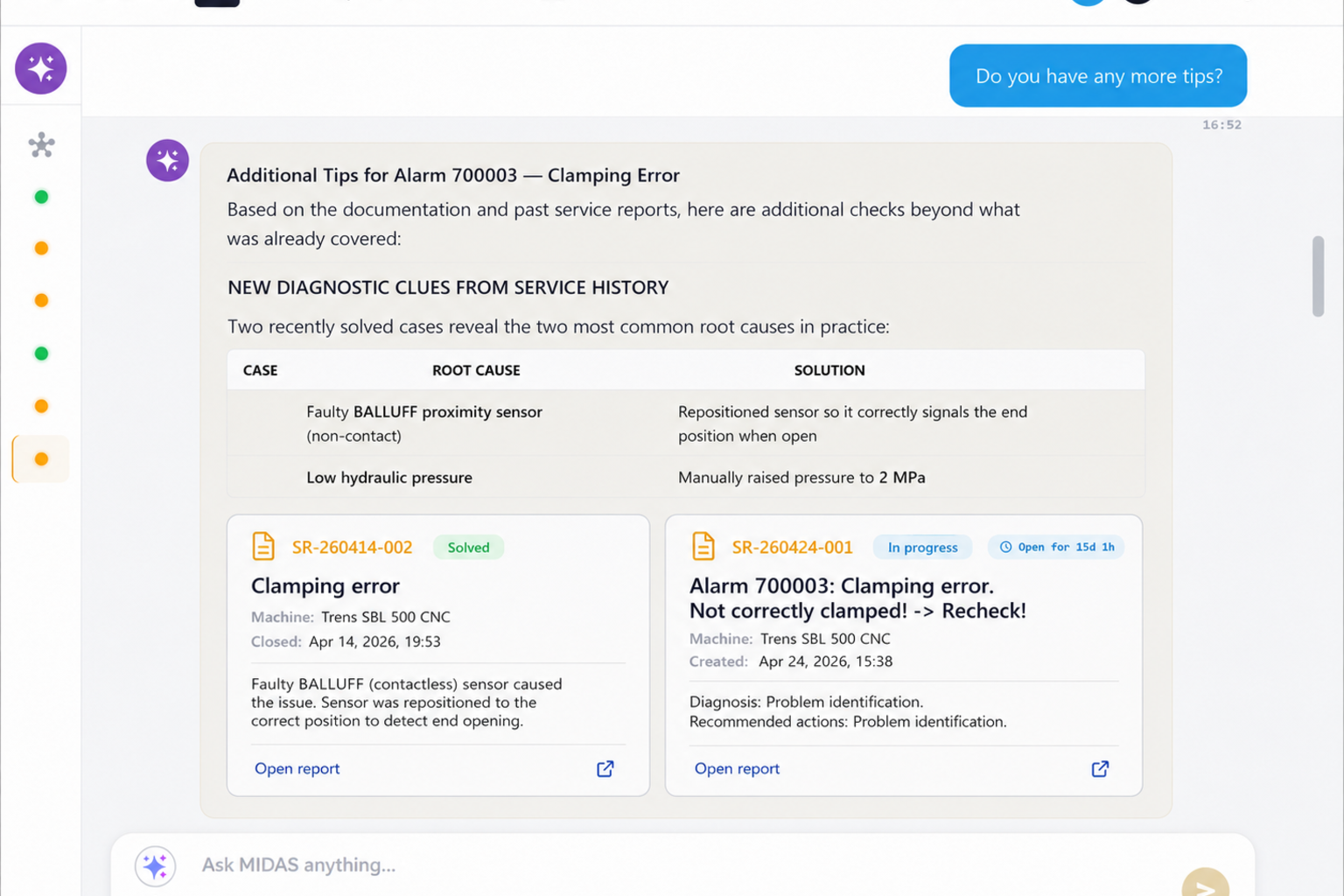
Every service case also becomes part of the machine’s digital memory. The assistant remembers previous failures, technician notes, repair actions, replaced parts and root causes, then uses this history to help solve similar problems faster in the future.
Everything the assistant
uses to answer
Static Machine Knowledge
Manuals, schematics, alarm codes, spare parts, service procedures and OEM documentation give the assistant trusted technical context for every machine.
Live Machine Data
IoT sensor values, PLC signals, machine logs, alarms, runtime, cycles and operating conditions help the assistant understand what is happening right now.
Service Memory
Previous failures, technician notes, diagnostic steps, replaced parts and root causes are stored in the machine history and reused for future troubleshooting.
Smart Troubleshooting
The assistant combines documentation, live data and service history to suggest probable causes, recommended checks and the next best action.

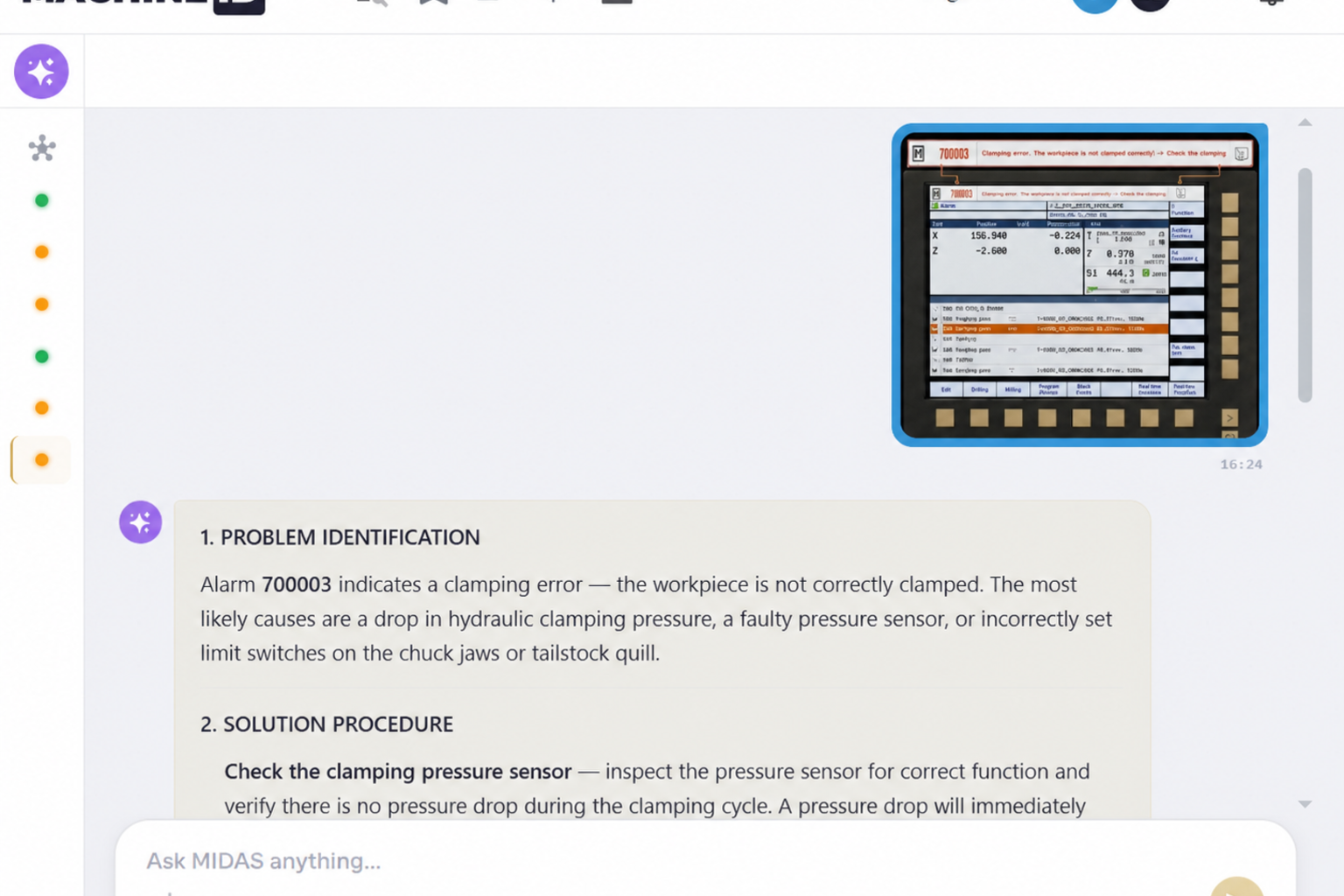
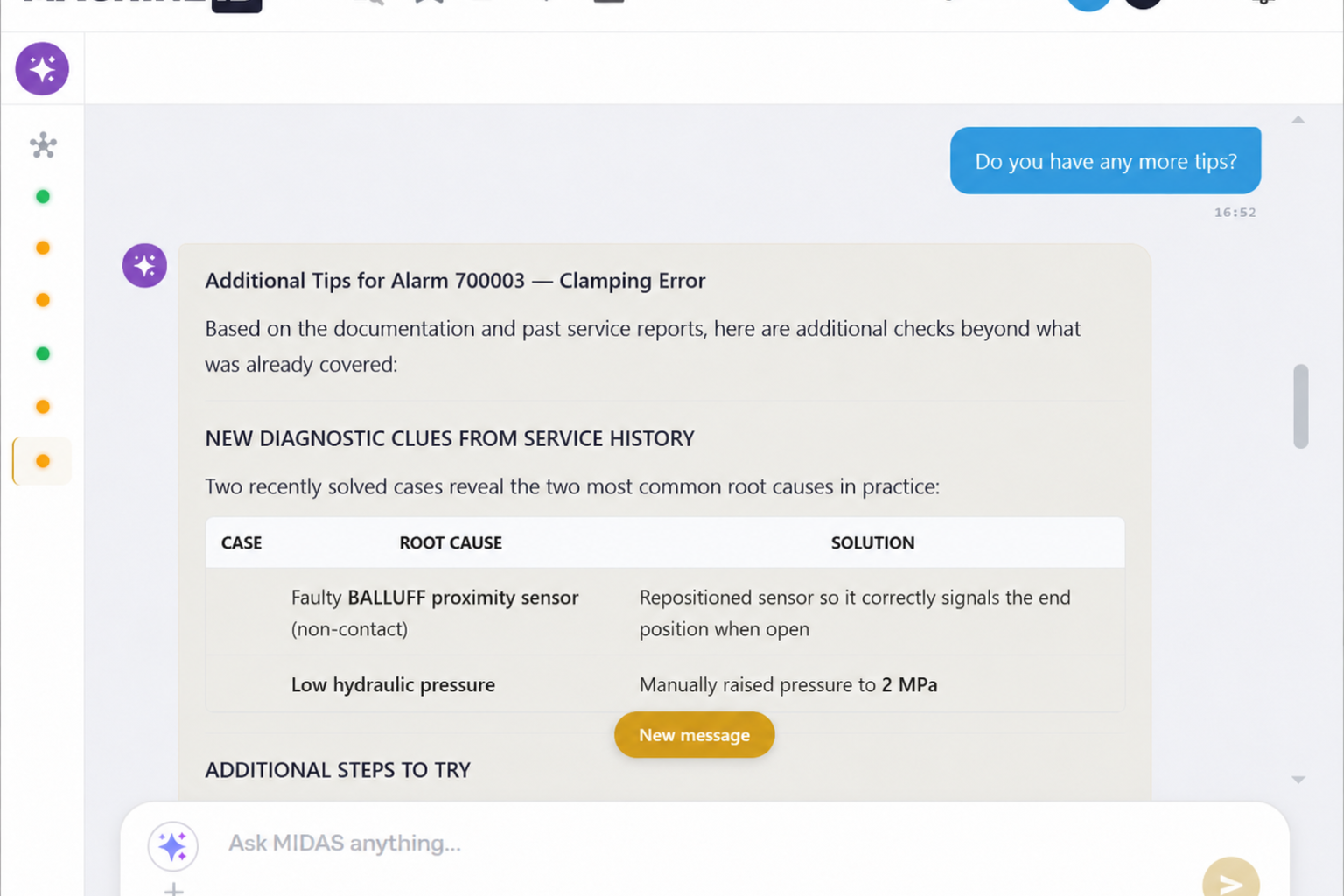
AI Assistant for
Faster Troubleshooting
Spot the issue, understand the cause, fix it faster.
- Instant root cause analysis
- Actionable repair guidance
- Higher first-time fix rate
Step by step,
toward the solution
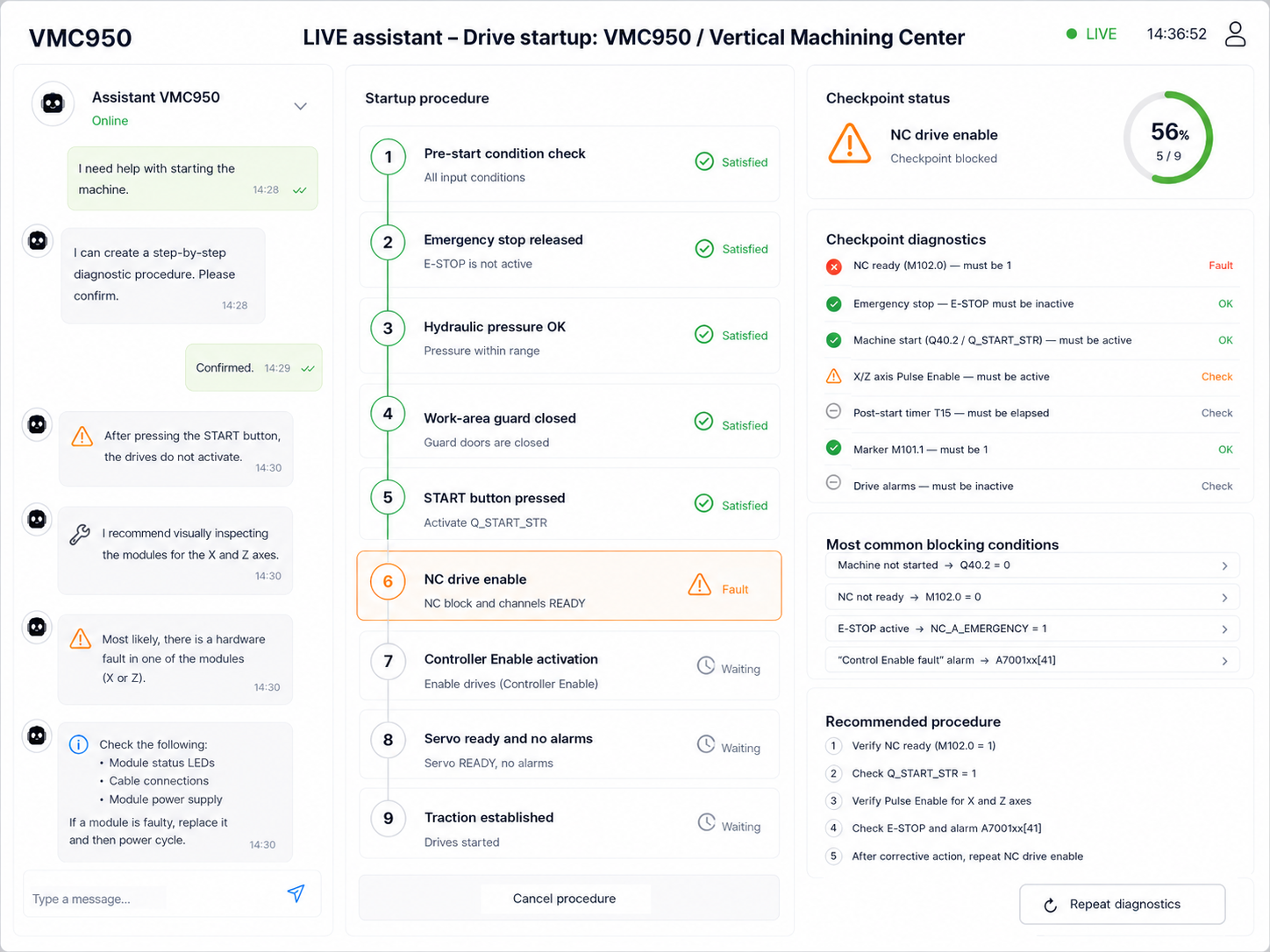
The assistant turns a blocked machine into a clear sequence of actions. It checks every startup condition in real time, pinpoints exactly where the chain breaks, and walks the technician through the corrective steps, until the drive comes up.
Live startup procedure
All 9 conditions tracked in sequence, satisfied, waiting, or faulted.
Pinpointed checkpoint
Diagnostics isolate the exact blocking signal, e.g. NC ready (M102.0).
Recommended procedure
A guided, source-backed checklist leads to the corrective action.
From machine data
to maintenance intelligence
When a failure occurs, the assistant does not rely on a single source of information. It connects the machine’s documentation, current operating state and previous service cases to build a complete picture of the problem.
Compare expected vs. actual
It can compare what the machine should be doing with what is actually happening, and flag deviations across temperature, pressure, vibration or cycle time.
Check if it happened before
It can check whether a similar alarm appeared before, find relevant procedures, schematics and repair notes from the machine’s service history.
Guide the next best action
Then it gives the technician clear, source-backed guidance on what to check next, faster troubleshooting, better decisions, less repeated problem solving.
How the AI Maintenance
Assistant works
Understands the machine
The assistant reads manuals, schematics, alarm codes, spare parts data, service procedures and machine-specific documentation.
Reads live context
It connects to IoT data, PLC signals or machine logs to understand current operating conditions, alarms and machine status.
Compares with service history
It checks previous service cases, similar failures, technician notes, replaced parts and successful repair actions.
Recommends next best action
It provides probable causes, recommended checks, repair steps and source-backed explanations for the technician.
Learns from the outcome
After the repair is completed, the result is saved back into the machine history and improves future troubleshooting.